
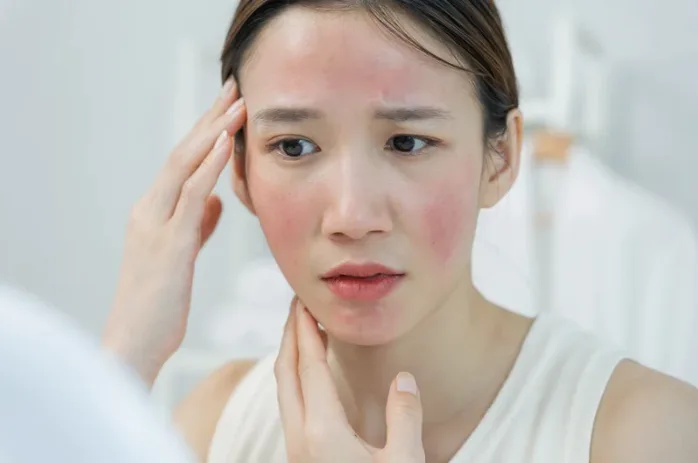
What is Rosacea?
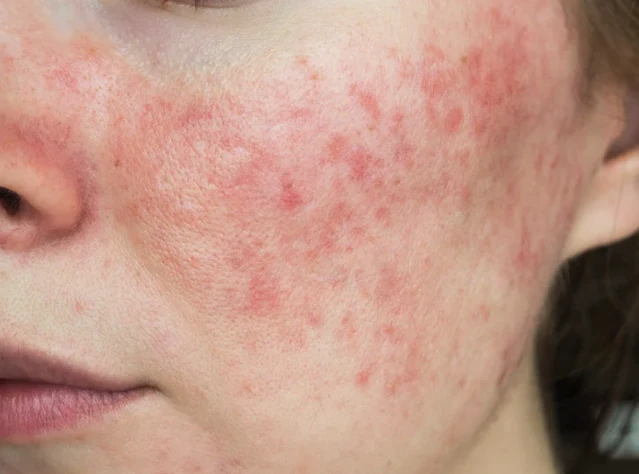
Rosacea is a chronic inflammatory skin condition primarily affecting the face. Because of its appearance, it is often mistaken for a simple tan, a blushing habit, or even adult acne. However, unlike a temporary flush, Rosacea involves underlying vascular issues and inflammation that require a medical approach to manage effectively.
Defining Rosacea Skin and Its Impact
Rosacea is a medical diagnosis involving the immune system and facial blood vessels, characterised by extreme hyper-reactivity. Unlike general sensitivity, it creates a persistent cycle of inflammation where the face becomes red, warm, and occasionally swollen.
The Impact on Patients
The unpredictability of flare-ups often carries a significant psychological burden, particularly in Singapore’s image-conscious environment:
- Social Anxiety: Sudden flushing can lead to discomfort in professional or social settings.
- Loss of Confidence: Persistent redness often persists despite a healthy lifestyle or expensive over-the-counter skincare.
- Physical Discomfort: The sensation of heat and swelling can be physically taxing during a flare.
Is it Rosacea or Adult Acne?
The term acne rosacea is a common source of confusion, leading many to treat their skin with harsh anti-acne ingredients that actually worsen inflammation. While both conditions present with red bumps, they are biologically distinct.
The Key Differentiators
| Feature | Adult Acne (Acne Vulgaris) | Rosacea |
|---|---|---|
|
Primary Cause |
Clogged pores and excess sebum. |
Vascular dysfunction and inflammation. |
|
Comedones |
Presence of blackheads or whiteheads. |
No blackheads or whiteheads. |
|
Redness |
Localised to the individual pimple. |
Widespread flushing across the cheeks/nose. |
|
Triggers |
Hormones, diet, or poor hygiene. |
Heat, spicy food, alcohol, and UV light. |
When to See a Professional: Identifying Early Signs
Recognising the transition from occasional blushing to chronic redness is vital for preventing long-term skin thickening. You should consider a clinical consultation if you experience:
- Persistent Flushing: Redness that takes hours to fade after exercise, heat, or spicy food.
- Visible Blood Vessels: Fine, thread-like red lines (telangiectasia) appearing on the cheeks or nose.
- Product Sensitivity: Stinging or burning sensations when applying standard, over-the-counter moisturisers.
- Heat Sensations: Facial skin that feels physically hot to the touch or remains “angry” long after a trigger has passed.
What are the Types of Rosacea?
Rosacea is not a single-pattern condition. Understanding which subtype you have is the first step in selecting the correct medical intervention.
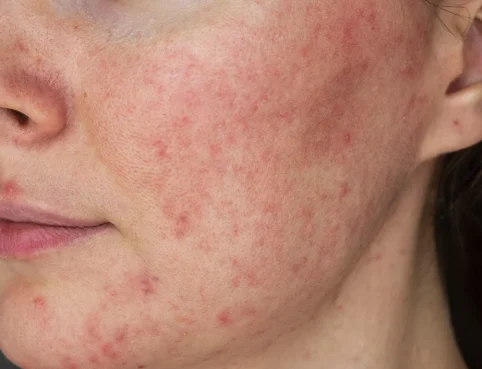
1. Erythematotelangiectatic Rosacea (ETR)
The most common form, characterised by persistent facial flushing and visible blood vessels (telangiectasia).
- Key Symptoms: Stinging, burning sensations, and rough/scaly skin.
- Clinical Focus: Vascular lasers to collapse overactive blood vessels and reduce background redness.
2. Papulopustular Rosacea (Acne Rosacea)
Often misdiagnosed as late-onset acne, this subtype features redness accompanied by small, red, pus-filled bumps.
- Key Symptoms: Painful “crops” of bumps on a very red, sensitive base.
- Clinical Focus: Anti-inflammatory measures combined with barrier repair to soothe the compromised skin.
3. Phymatous Rosacea
A progressive stage involving the thickening of the skin, most commonly on the nose (Rhinophyma).
- Key Symptoms: A bulbous, irregular skin texture; more common in men with long-term untreated rosacea.
- Clinical Focus: Early intervention is vital to prevent permanent structural changes.
4. Ocular Rosacea
This subtype affects the eyes and can occur with or without visible facial redness.
- Key Symptoms: A gritty sensation (like sand in the eye), persistent watering, and redness.
- Clinical Focus: Requires immediate medical attention to prevent long-term vision complications.
What Causes Rosacea?
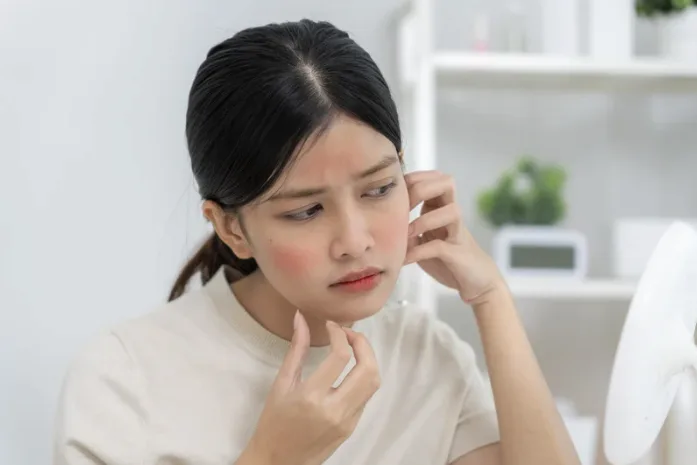
While the exact cause of rosacea remains a subject of medical research, it is widely accepted that a combination of genetics and environmental factors plays a role. In Singapore, our unique climate serves as a constant catalyst for symptoms.
The Role of the Skin Barrier and Genetics
Study suggests that those with rosacea have a naturally weaker skin barrier. This allows irritants to penetrate more deeply and moisture to escape more easily, leading to a state of chronic low-grade inflammation. Genetics also play a part; if a family member has the condition, you are at a higher risk. This biological predisposition means the skin’s alarm system is permanently set to high, reacting to stimuli that wouldn’t bother someone with a healthy barrier.
Tropical Triggers: Heat, Humidity, and UV Rays
The Singapore climate is particularly challenging for rosacea sufferers.
- UV Radiation: Sunlight is the number one trigger for rosacea flare-ups. UV rays damage the skin’s supporting collagen and cause blood vessels to dilate.
- Heat: High temperatures cause blood vessels to expand to cool the body down, which directly triggers the characteristic flush.
- Humidity: In high humidity, sweat and oil can easily clog your pores, which makes the redness and painful bumps of certain types of rosacea much worse.
Local Lifestyle Factors: From Spicy Food to Hot Drinks
Lifestyle choices common in Singapore can inadvertently trigger the condition. Dietary choices that induce heat or heatiness often result in immediate flushing.
- Spicy Hawker Fare: Chilli and spices contain capsaicin, which triggers heat receptors and dilates blood vessels.
- Hot Beverages: Drinking teh tarik or kopi while they are steaming hot can cause a thermal trigger.
- Alcohol: Specifically red wine, which contains histamines that promote flushing. Switching to iced versions of local drinks and opting for milder spice levels can help in managing daily redness.
Rosacea Treatment Options in Singapore
Managing rosacea requires a combination of clinical technology and medical-grade formulas. Depending on your subtype, one or more of the following approaches may be recommended.
Vascular Lasers and Light Therapy
Vascular lasers are the gold standard for treating visible redness. These devices emit a specific light wavelength that is absorbed by the red pigment in blood vessels.
- How it works: The targeted heat causes overactive vessels to collapse, which the body then naturally reabsorbs.
- The Benefit: Reduces background redness and visible thread veins with minimal downtime, making it ideal for busy professionals.
- Options: For milder, general redness, Intense Pulsed Light (IPL) can also be used to even out skin tone.
Topical and Oral Medical Treatments
If you are dealing with the bumpy or inflammatory subtype, medical-grade interventions are often the first line of defence.
- Topical Creams: Ingredients like Azelaic Acid or Metronidazole help calm the skin surface and manage skin mites that can trigger inflammation.
- Oral Medications: For severe flare-ups, a doctor may prescribe a short course of oral medication to bring inflammation under control quickly.
- Note: These are therapeutic interventions, not standard skincare, and require a professional’s guidance.
Skin Barrier Restoration and Biostimulators
Modern rosacea management now focuses on improving the foundation of the skin rather than just treating the redness.
- Polynucleotides (PN): These injectable biostimulators help repair the skin at a cellular level.
- Strengthening the Barrier: A stronger skin barrier acts as a shield, making your skin less likely to overreact to Singapore’s heat and humidity.
- Preventative Care: This is especially useful for local residents who cannot avoid sun exposure, as it builds long-term skin resilience.
Frequently Asked Questions on Rosacea Management
Can rosacea go away permanently?
Currently, there is no permanent cure for rosacea, but it can be very effectively managed. With a combination of the right aesthetic treatments and trigger avoidance, many patients achieve periods of clear skin that last for years. The goal of treatment is to move the condition into “remission” where the redness is no longer a daily concern.
What is the best cream for rosacea in Singapore?
Does diet really affect my skin redness?
Yes, diet is a major factor. For many, the gut-skin connection is real. High-histamine foods, alcohol, and spicy dishes can cause immediate vasodilation. Keeping a food diary can be a helpful way to identify if your morning coffee or your favourite spicy laksa is contributing to your facial redness.

Why Choose Dr Shane for Rosacea Treatment in Singapore?
If you are tired of hiding your redness under heavy makeup or feeling self-conscious about flare-ups, it is time to seek a medical solution. Professional intervention can stop the progression of rosacea and help you achieve a clearer, more even complexion.
At Dr Shane’s clinic, we believe remarkable results begin with three fundamentals: medical precision, honest advice, and customised care.
While many clinics focus on selling treatments, we prioritise:
- In-depth 1-1 skin health consultations (at least 30 mins)
- HSA/FDA-compliant protocols using approved devices with documented safety profiles
- Personalised energy settings adjusted for your unique skin thickness and concerns
What makes our approach different?
✔ Doctor-Led Consultations
Every treatment plan begins with a medical evaluation of your skin’s needs – not a sales conversation.
✔ Safety-First Philosophy
We use only HSA-approved devices and disclose all potential risks transparently.
✔ No Pressure, Just Professional Advice
You’ll leave your consultation either:
- Confident this treatment is right for you, or
- Aware of better alternatives for your goals
✔ Natural-Looking Results
Our treatment plans prioritise gradual, authentic improvement over dramatic but short-lived changes.
✔ Continued Aftercare
Post-treatment guidance to help maintain and optimise your results
The First Step is Always a Conversation
Many patients discover during consultation that their skin concerns actually require:
→ A different treatment approach
→ Combination therapies
→ Or simply more time before considering procedures
Book a skin health assessment to get professional insights before deciding on any treatment.
Let us help you find what’s right for your skin—not just what’s trending.
Secure your skin health consultation slot with Dr Shane today
Great skin starts with the right diagnosis.