
Published on: 24 September 2026
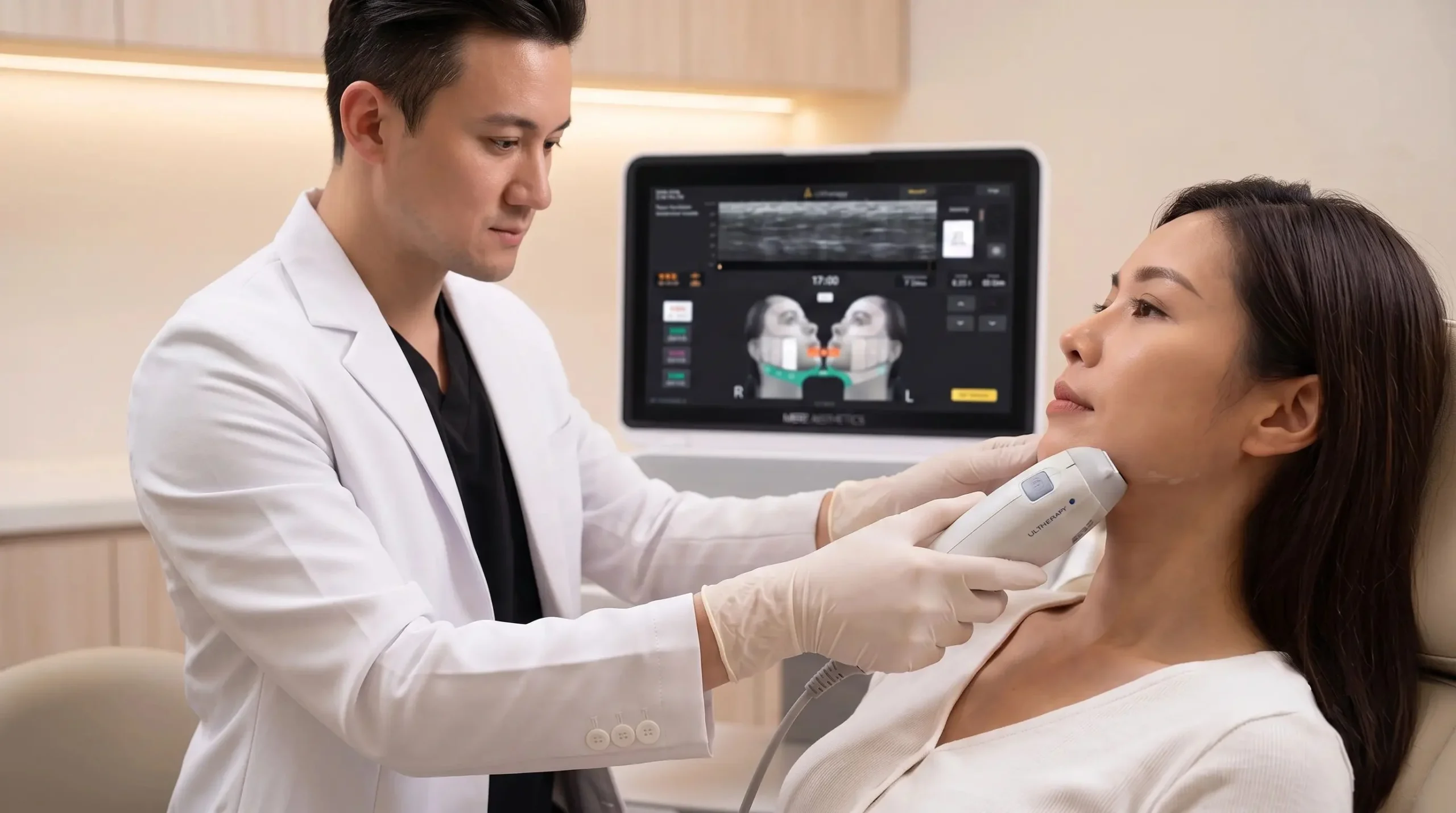
Ultherapy Prime uses real-time ultrasound imaging, which lets your doctor see the layer being treated instead of working from estimation alone. It reaches the SMAS layer, the same structural layer addressed in a surgical facelift, while most radiofrequency devices work at a shallower level. Unlike a facelift, it needs no incisions, no anaesthesia, and no real recovery time. Results build gradually over two to six months as your body produces new collagen, rather than showing up immediately. It works best for mild to moderate sagging, and more advanced laxity may still need surgery to get the result you actually want.
Choosing between Ultherapy Prime and other skin tightening options gets confusing fast, since most clinics market their own technology as the best. Ultherapy Prime stands apart mainly because of what it can reach and see: real-time imaging during treatment, and a depth that matches surgical facelift layers, not just the skin’s surface. Radiofrequency and laser devices work at shallower depths, and a facelift involves surgery most people want to avoid. None of these are wrong choices; they solve different problems, and the right one depends on how much sagging you have and how invasive you’re willing to go.
What Makes Ultherapy Prime Different From Other Skin Tightening Treatments?
Ultherapy Prime is built around two things most alternatives don’t have: visualisation and depth. During treatment, your doctor sees the actual layer of tissue being targeted in real time, so energy goes exactly where it’s meant to instead of being estimated from the surface.
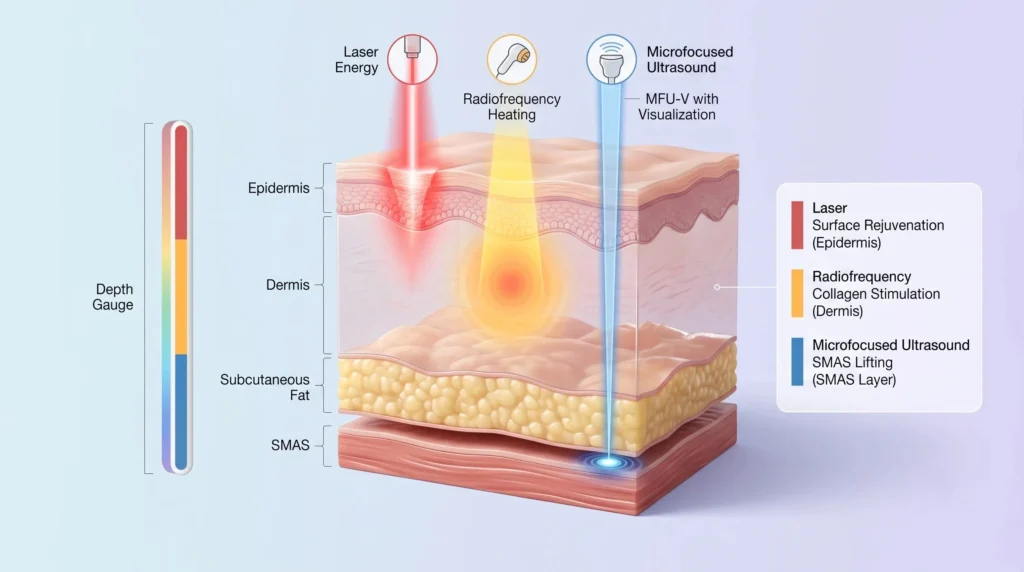
That depth matters clinically, not just as a selling point. A Pan-Asian expert consensus review comparing energy-based skin tightening devices found that microfocused ultrasound reaches the deep reticular dermis and SMAS layer, the same structural layer targeted in surgical facelifts, while radiofrequency and laser devices generally act on the more superficial dermis. That’s the practical difference, as Ultherapy Prime works on the support structure underneath your skin, not just the surface layer.
How Ultherapy Prime Compares to Other Treatments
| Treatment | How it Works | Depth Reached | Downtime |
|---|---|---|---|
|
Ultherapy Prime |
Focused ultrasound with real-time imaging |
SMAS layer (deep) |
None |
|
Radiofrequency |
Heat energy delivered through the skin surface |
Upper to mid dermis |
None to minimal |
|
Laser skin tightening |
Light energy absorbed by skin tissue |
Surface to mid dermis |
Minimal, varies by laser type |
|
Facelift surgery |
Surgical repositioning of tissue and skin |
SMAS layer and below |
2 to 4 weeks |
Ultherapy Prime vs. Radiofrequency
Both work without surgery, but they act on different depths and through different mechanisms. Radiofrequency heats the skin through direct contact, which is effective for the upper dermis but doesn’t reliably reach the SMAS layer the way focused ultrasound does. A split-face clinical trial comparing the two found that real-time imaging gives ultrasound treatment more precise depth control than radiofrequency, which works without the same visualisation. Both approaches are reasonable options; the difference is how deep the effect reaches and how directly your doctor can confirm placement during treatment.
Ultherapy Prime vs. Laser Skin Tightening
Lasers work at or near the skin’s surface, improving texture, tone, and fine lines effectively. Ultherapy Prime targets the structural layer beneath, which is why the two are often complementary rather than competing, like lasers for surface quality, ultrasound for deeper lift. If your main concern is sagging rather than surface texture, depth matters more than which technology delivers the energy.
Ultherapy Prime vs. a Traditional Facelift
A facelift physically repositions tissue through surgery and delivers the most dramatic, immediate result available, but it comes with incisions, anaesthesia, and two to four weeks of real recovery. Ultherapy Prime works with your body’s own collagen response instead, which means a smaller effect achieved without any of that downtime. For mild to moderate sagging, that trade-off favours Ultherapy Prime. For significant, advanced laxity, surgery may still be the more effective choice, and an honest assessment should tell you which category you’re in rather than assuming.
Non-Surgical Treatment Options in Singapore
The right choice depends on two things: how much sagging you have, and how much downtime you’re willing to accept. Mild-to-moderate laxity with no interest in surgery points toward Ultherapy Prime. Surface concerns like fine lines or texture without much sagging point toward laser treatment, sometimes combined with ultrasound. Advanced sagging that’s changed your facial contour significantly is where a facelift consultation becomes worth having, even if you end up choosing not to go that route.
No treatment on this list is objectively “better” outside of your specific anatomy and goals, which is why a proper assessment matters more than picking a technology off a comparison chart.
Frequently Asked Questions
Does Ultherapy Prime really work?
Yes, and it has real clinical evidence behind it, not just marketing claims. Peer-reviewed comparative trials show measurable skin tightening from microfocused ultrasound, with results building over two to six months as new collagen forms. How much it does for you depends on your age and the laxity you’re starting with, which an assessment tells you.
Why choose Dr Shane for Ultherapy Prime in Singapore?
We assess your skin’s actual structure before recommending anything, rather than defaulting to one treatment for every patient. Dr Shane has been in aesthetic practice since 2015 and is a member of the American Academy of Aesthetic Medicine, so you get a clinical read on whether Ultherapy Prime, a different treatment, or a combination genuinely fits your case.
Can I do HIFU after Ultherapy?
It depends on what’s actually meant by “HIFU.” In Singapore, the term often gets used generically for ultrasound devices that aren’t Ultherapy Prime, so the first step is confirming what treatment you actually had. Combining different energy-based treatments too close together can over-treat the same tissue, so space them out and check with your doctor before layering one on another.

Why Choose Dr Shane for Treatment in Singapore?
If you are ready to move past the uncertainty of retail wellness trends and explore evidence-based clinical treatments tailored to your face, we welcome you to contact our team. We assess your skin’s actual laxity and structure first, then talk through which option, or combination, genuinely fits what you’re trying to achieve. If you’re weighing Ultherapy Prime against other options, learn more about this treatment and pricing or book a consultation with us to get a straight answer for your skin specifically.
At Dr Shane’s clinic, we believe remarkable results begin with three fundamentals: medical precision, honest advice, and customised care.
While many clinics focus on selling treatments, we prioritise:
- In-depth 1-1 skin health consultations (at least 30 mins)
- HSA/FDA-compliant protocols using approved devices with documented safety profiles
- Personalised energy settings adjusted for your unique skin thickness and concerns
What makes our approach different?
✔ Doctor-Led Consultations
Every treatment plan begins with a medical evaluation of your skin’s needs – not a sales conversation.
✔ Safety-First Philosophy
We use only HSA-approved devices and disclose all potential risks transparently.
✔ No Pressure, Just Professional Advice
You’ll leave your consultation either:
- Confident this treatment is right for you, or
- Aware of better alternatives for your goals
✔ Natural-Looking Results
Our treatment plans prioritise gradual, authentic improvement over dramatic but short-lived changes.
✔ Continued Aftercare
Post-treatment guidance to help maintain and optimise your results
The First Step is Always a Conversation
Many patients discover during consultation that their skin concerns actually require:
→ A different treatment approach
→ Combination therapies
→ Or simply more time before considering procedures
Book a skin health assessment to get professional insights before deciding on any treatment.
Let us help you find what’s right for your skin—not just what’s trending.
Secure your skin health consultation slot with Dr Shane today
Great skin starts with the right diagnosis.