
Published on: 27 November 2026
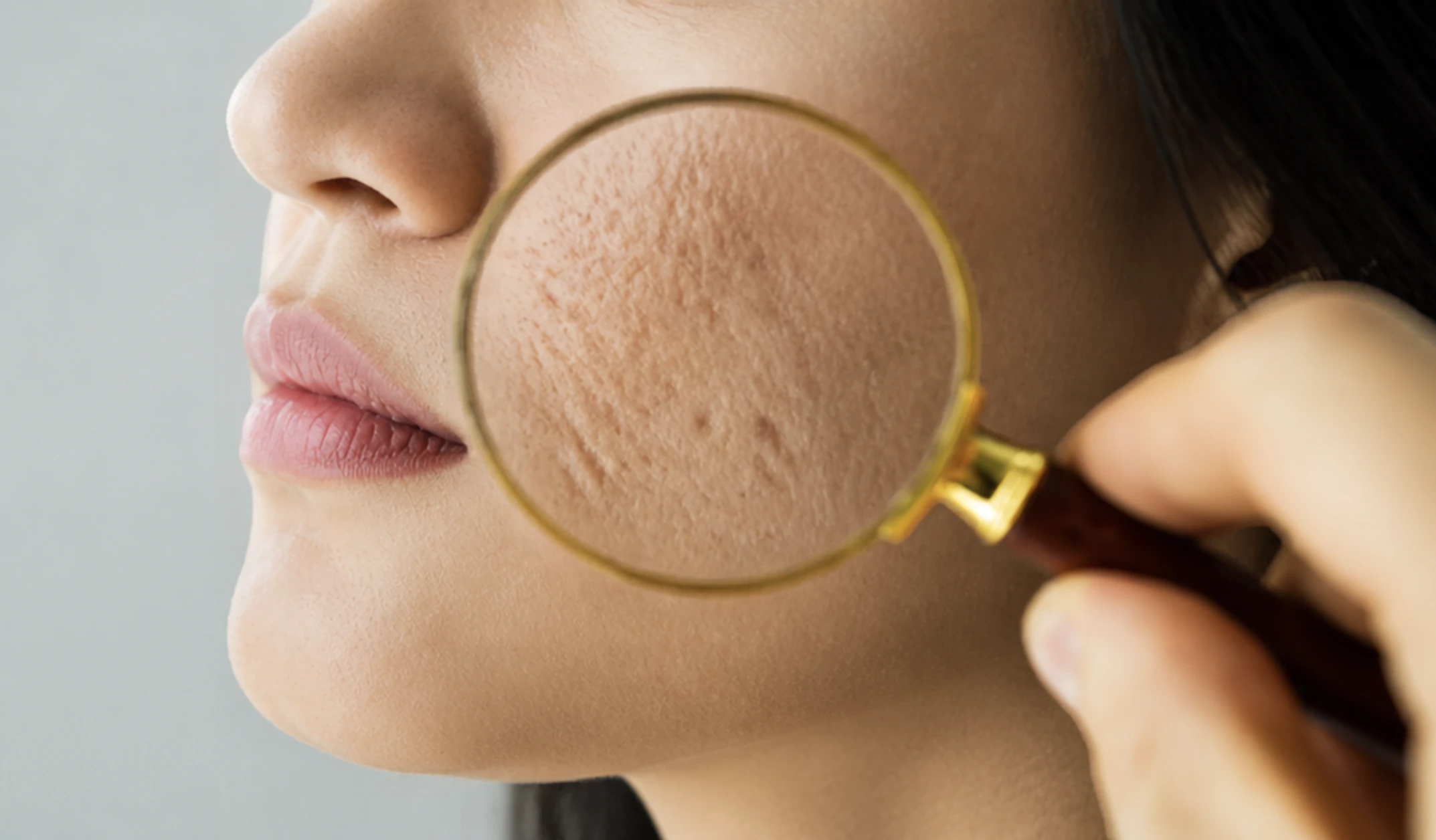
The main types of acne scars are atrophic scars, which sit below the skin surface, and raised scars, which sit above it. Atrophic scars make up most acne scarring and include ice pick, boxcar and rolling scars, each with a different width, depth and edge. Raised scars include hypertrophic scars and keloids, which are more common on the jawline, chest and back. Many people have more than one type, and flat brown or red marks are often not scars at all. Knowing which type you have matters because each responds to a different treatment.
Key Takeaways
- Check whether a mark sits below, above or level with the skin, as only textured marks are true scars.
- Ice pick scars are narrow and deep, boxcar scars have sharp edges, and rolling scars look wavy.
- Raised scars that spread beyond the original spot may be keloids and need medical review.
- Most people have mixed scar types, so one treatment rarely suits every scar.
- Treating active acne early and avoiding picking lowers the risk of new scars.
What Are the Main Types of Acne Scars?
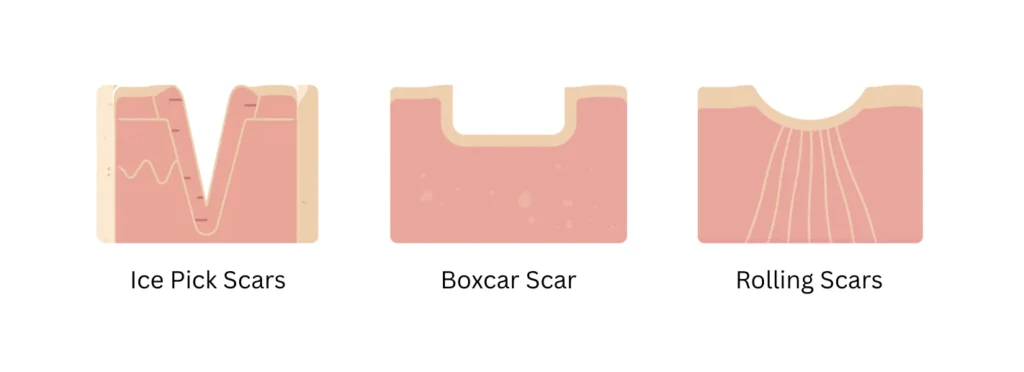
Acne scars are grouped by whether tissue was lost or overproduced during healing. A widely used acne scar classification sorts atrophic scars into ice pick, boxcar and rolling types based on their width, depth and shape.
Raised scars form when the skin makes too much collagen while healing. They are less common on the face but more likely in people prone to thick scarring.
Atrophic Acne Scars
Ice Pick Scars
Ice pick scars are narrow, usually under 2 mm wide, and extend deep into the skin like a small puncture. The opening looks small, but the scar is often wider underneath.
Boxcar Scars
Boxcar scars are round or oval dips with sharp, steep edges and a flatter base, similar to chickenpox scars. They range from shallow to deep and are often found on the cheeks and temples.
Rolling Scars
Rolling scars are wider and shallower, giving the skin a wavy, uneven look. They happen when fibrous bands under the skin tether it to deeper tissue and pull the surface down.
Tethered (Anchored) Scars
Some atrophic scars are tethered, meaning fibrous bands anchor the base of the scar to deeper tissue. This is most common with rolling scars and some deeper boxcar scars, and it keeps the skin pulled down even when the surface is treated.
Tethered scars usually need the bands released first through a procedure called subcision. A fine needle is passed under the skin through a tiny entry point to cut the bands, allowing the skin to lift and new collagen to form as it heals.
Bruising and swelling are common for several days, and moderate scarring often needs a few sessions spaced about a month apart. Subcision is often combined with resurfacing treatments such as microneedling or fractional laser, and may not suit people prone to keloids, those who recently took isotretinoin or those with bleeding disorders.
Raised Acne Scars
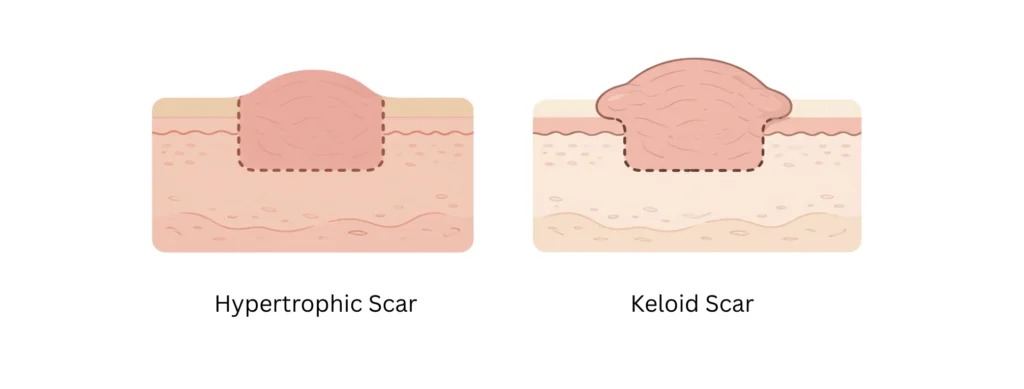
Raised scars form when the skin produces too much collagen while a deep spot heals, leaving firm tissue above the surface. They are less common on the face than atrophic scars and more likely in people with a personal or family tendency towards thick scarring.
Hypertrophic Scars
Hypertrophic scars are firm, raised bumps that stay within the area of the original spot. They can soften and flatten over time, and our hypertrophic scar and keloid guide explains the options.
Keloid Scars
Keloids grow beyond the borders of the original spot and may itch or feel tender. They are more common on the jawline, chest, back and shoulders, and in people with a personal or family history of keloids.
How to Tell Acne Scar Types Apart
These simple checks help you describe your scars before an assessment:
- Side lighting. Shine a light from the side in a mirror. Rolling and shallow boxcar scars show up as shadows that overhead light often hides.
- Stretch test. Gently stretch the skin. Rolling scars soften or flatten, while ice pick and deep boxcar scars stay visible.
- Edges. Sharp, defined edges suggest boxcar scars, while soft, sloping edges suggest rolling scars.
- Height. Raised scars sit above the skin, and those spreading beyond the original spot may be keloids.
A review of atrophic acne scarring notes that scar type guides treatment choice, which is why identification comes first. During a skin assessment at our Singapore clinic, the doctor also checks whether scars are tethered to deeper tissue.
Marks That Are Not Scars
Flat marks left after a breakout are often mistaken for scars.
- Brown or grey marks are usually post-inflammatory hyperpigmentation, extra pigment that often fades over months.
- Pink or red marks are post-inflammatory erythema, caused by widened small blood vessels.
Neither changes the skin’s texture, so they need a different plan from true scars.
Can Acne Scars Go Away on Their Own?
True acne scars do not usually disappear on their own because the collagen structure has changed. Raised hypertrophic scars may flatten gradually, but atrophic scars tend to stay or become more noticeable as skin loses collagen with age.
Flat discolouration is different and often fades with time and sun protection. Singapore’s strong UV can darken marks and make scars look deeper, so daily sunscreen helps.
Which Acne Scars Are Hardest to Treat?
Deep ice pick scars and tethered rolling scars are generally the most challenging. Ice pick scars are narrow but deep, and surface treatments struggle to reach their base, while rolling scars often need the tethering bands released before resurfacing helps.
Keloids can also return after treatment and usually need ongoing care. Our acne scar removal guide explains which treatments suit each scar type, and our acne scars treatment page outlines the options available at the clinic.

Why Choose Dr Shane for Treatment in Singapore?
If you are ready to move past the uncertainty of retail wellness trends and explore evidence-based clinical treatments tailored to your face, we welcome you to contact our team.
At Dr Shane’s clinic, we believe remarkable results begin with three fundamentals: medical precision, honest advice, and customised care.
While many clinics focus on selling treatments, we prioritise:
- In-depth 1-1 skin health consultations (at least 30 mins)
- HSA/FDA-compliant protocols using approved devices with documented safety profiles
- Personalised energy settings adjusted for your unique skin thickness and concerns
What makes our approach different?
✔ Doctor-Led Consultations
Every treatment plan begins with a medical evaluation of your skin’s needs – not a sales conversation.
✔ Safety-First Philosophy
We use only HSA-approved devices and disclose all potential risks transparently.
✔ No Pressure, Just Professional Advice
You’ll leave your consultation either:
- Confident this treatment is right for you, or
- Aware of better alternatives for your goals
✔ Natural-Looking Results
Our treatment plans prioritise gradual, authentic improvement over dramatic but short-lived changes.
✔ Continued Aftercare
Post-treatment guidance to help maintain and optimise your results
The First Step is Always a Conversation
Many patients discover during consultation that their skin concerns actually require:
→ A different treatment approach
→ Combination therapies
→ Or simply more time before considering procedures
Book a skin health assessment to get professional insights before deciding on any treatment.
Let us help you find what’s right for your skin—not just what’s trending.