
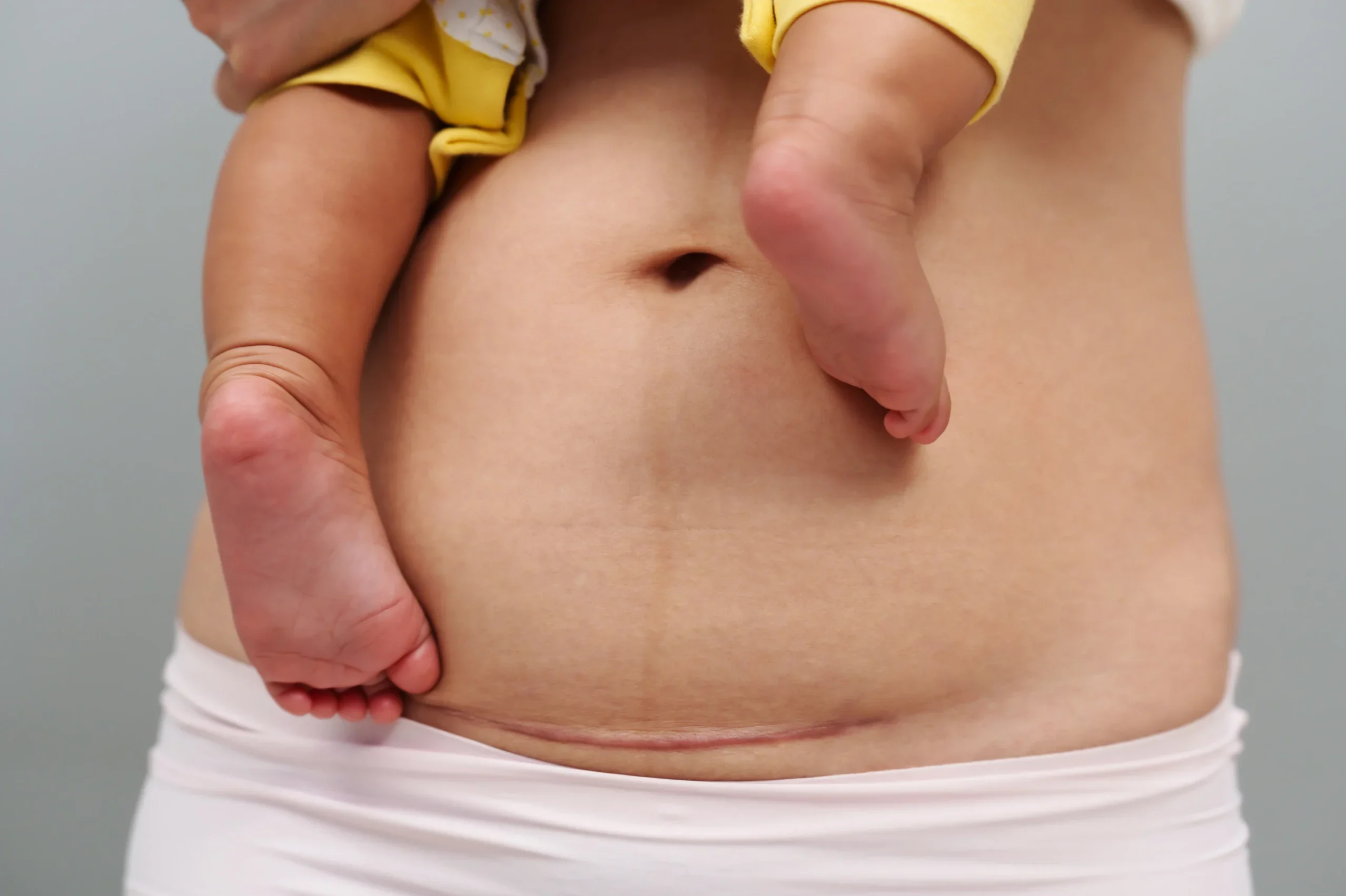
Are you bothered by the appearance of your C-section scar? The scar is a reminder of a powerful life event, but if it is raised, discoloured, or causes discomfort, it can affect your confidence and well-being. Knowing the options for improving its look and feel is the first step toward reclaiming comfort in your skin.
Dr Shane’s clinic offers personalised, expert care to help you understand your scar and find the most suitable, advanced solutions to smooth its texture and fade its colour. We believe in providing treatments that lead to natural, beautiful healing.
Understanding Your C-Section Scar: Types, Healing Stages, and Timeline
The C-Section Scar Healing Timeline: When Does it Start to Fade?
The journey from a fresh surgical incision to a mature, faded C-section scar follows three key phases. It is important to have realistic expectations: no scar will disappear completely, but nearly all will flatten and fade considerably over time.
- Inflammatory Phase (Days 1-6): The initial stage where the body controls bleeding and the wound begins to close. The scar line will appear red and slightly raised as blood vessels and immune cells gather.
- Proliferative Phase (Weeks 1-6): New tissue, specifically collagen, is rapidly produced to fill the wound. The scar becomes noticeably thicker, firmer, and redder due to intense blood vessel formation. This is when the early signs of a problematic scar (excessive redness, hardening) can emerge.
- Remodelling/Maturation Phase (Six Weeks to 12 Months, or More): This is the longest phase. The collagen fibres reorganise, becoming less randomly structured. The blood vessels decrease, causing the scar to lighten from red or purple to pink, and eventually to a colour closer to your natural skin tone. This final stage is crucial; how long until a C-section scar fades? It takes 12 months or more for the scar to reach its final, stable appearance.

Identifying Your Scar Type: Hypertrophic vs. Keloid C-Section Scar
When the body’s collagen production during the proliferative phase becomes excessive, an abnormal scar can form. Distinguishing between these types is crucial, as they require different treatment approaches.
| Scar Type | Key Characteristics | Growth Boundary | Spontaneous Regression |
|---|---|---|---|
|
Normal Mature Scar |
Flat, pale, soft, and flexible. |
Confined to the wound area. |
Yes, over many months. |
|
Hypertrophic Scar |
ContentRaised, thick, firm, often red or purple, and can be itchy or tender. |
Confined within the lines of the original incision. |
Can regress (improve) slowly over 12–24 months. |
|
Keloid Scar |
Raised, thick, hard, and often intensely red, purple, or dark brown. |
Grows aggressively beyond the border of the original wound. |
Rarely regresses on its own; highly likely to recur after surgery. |
If you notice your C-section scar is becoming intensely itchy, painful, or is growing well outside the original surgical line, you may be developing a keloid C-section scar. Early intervention from a specialist can greatly improve the outcome.

Why Some C-Section Scars Become Problematic: Factors Affecting Scarring
The way a scar heals is not random; it is influenced by a combination of personal biology and external forces. Factors that can increase the likelihood of a prominent or problematic scar include:
- Genetics and Skin Tone: Individuals with a personal or family history of keloids or hypertrophic scars have a higher predisposition. Those with darker skin (Fitzpatrick Types III-VI) are at a higher risk of keloid formation and hyperpigmentation.
- Tension on the Wound: Scars that occur over areas of movement or high skin tension, such as the lower abdomen, are more likely to be raised.
- Incision Type and Closure: While most C-section scars are low, horizontal cuts (a ‘bikini line’ incision), the technique of the surgical closure and the amount of inflammation/infection at the wound site can affect the final result.
- Post-Operative Care: Factors like infection, poor nutrition, and neglecting sun protection during the first year of healing can negatively impact the scar’s appearance and increase the risk of permanent discolouration.
Essential At-Home Care for C-Section Scar Prevention and Management
Silicone Gel and Silicone Sheets for C-Section Scars
Silicone creates a semi-occlusive layer that locks in moisture and raises the temperature slightly. This constant hydration regulates collagen production, preventing the excessive buildup that causes thick, raised scars, while also softening existing scar tissue.


Post-Healing Scar Massage Techniques and Their Benefits
Post-healing scar massage, typically started around 6–8 weeks postpartum after consulting a doctor, involves daily 5-10 minute sessions using oil to improve the scar’s texture and flexibility. Techniques include transverse friction, circular movements, and lifting and rolling the scar to break down collagen and prevent adherence to deeper tissue. Regular practice helps reduce sensitivity and increase pliability.

Sun Protection and Lifestyle Tips for Scar Appearance
To prevent permanent hyperpigmentation, protect the scar from UV exposure for at least 12 months using a high-SPF (30+) broad-spectrum sunscreen, as scar tissue lacks adequate protective pigment cells. Additionally, wear loose clothing, avoid extreme heat in early months, and maintain a diet rich in vitamins C and A, and zinc to support optimal healing and reduce inflammation.
The Limitations of At-Home Care: When Topical Products Fall Short
While at-home methods like silicone therapy and massage are vital for managing normal healing and preventing the worsening of scars, they have inherent limitations, particularly when the scar is already problematic.
- Inability to Target Deep Tissue: Topical creams, gels, and even massage primarily affect the top layers of the skin (epidermis and superficial dermis). They cannot effectively break down the dense, deeply bound collagen matrix found in mature, thick keloid C-section scars or deep hypertrophic scars.
- No Effect on Deep Discolouration: For long-standing redness (vascularity) or deep brown hyperpigmentation, topical products cannot reach or destroy the abnormal blood vessels or the concentrated melanin clusters deep within the skin. Only specialised medical procedures, such as vascular and pigment-specific lasers, can achieve this level of depth.
- Ineffective for Atrophic Scars: If the C-section scar is depressed, sunken, or tethered, at-home products cannot restore lost tissue volume. This requires interventions that physically lift the tissue or stimulate new collagen production from below the surface, such as dermal fillers or subcision.
- Keloid Recurrence Risk: Although silicone is the best preventative measure, some keloid scars grow aggressively beyond the initial wound boundary, this often require the potent anti-inflammatory action of intralesional corticosteroid injections to stop their growth.
Medical Aesthetic Treatments for C-Section Scar Reduction
When at-home care proves insufficient for raised, depressed, or discoloured scars, advanced aesthetic treatments offer a powerful means of revision. Dr Shane specialises in multi-modal therapy, combining different techniques to achieve the best cosmetic outcome for your specific scar profile.
Injectable Treatments: Steroids and Dermal Fillers for Scars
Injectable treatments are highly effective for correcting specific scar characteristics, such as thickness and depression.
- Intralesional Steroid Injections: This injectable is the primary treatment for raised or thick C-section scars (hypertrophic or keloid), where the anti-inflammatory medication is injected directly into the tissue to slow down collagen production, causing the scar to flatten and soften over a series of treatments.
- Dermal Fillers & Polynucleotide Skinboosters: For C-section scars that are depressed or pitted (atrophic), specialised Dermal Fillers or Polynucleotides are injected beneath the scar to physically lift the tissue and stimulate the body’s own collagen, providing a smoother and more contoured appearance.

Non-Surgical Laser Therapy Options for Texture and Colour
Laser technology offers precise non-surgical control over scar appearance with minimal downtime, with different wavelengths targeting either color or texture. Different wavelengths target different components of the scar.- InMode Lumecca (Intense Pulsed Light – IPL): Used to address redness in scars, this device targets haemoglobin (the red pigment in blood) and is selectively absorbed by the blood vessels within fresh, red, or purple scars. By safely treating the excess blood vessels, the light energy quickly reduces the redness and inflammation, encouraging the scar to fade and mature faster.
- Fractional CO2 Lasers: These lasers are used to resurface the scar’s texture by creating thousands of microscopic channels in the scar tissue (fractional resurfacing). This process stimulates a powerful collagen remodelling response in the dermis, breaking down old, disorganised tissue and promoting new, smoother collagen for a flatter, more refined texture and improved pliability.


Why choose Dr Shane for C-Section Scar Treatment in Singapore?
Choosing a specialist with expertise in skin repair and aesthetic remodelling is the single most important step in achieving an optimal outcome for your C-section scar. We understand that a scar is more than just a surface issue; it represents a personal story and is often a source of discomfort or self-consciousness.
At Dr Shane’s clinic, we believe remarkable results begin with three fundamentals: medical precision, honest advice, and customised care.
While many clinics focus on selling treatments, we prioritise:
- In-depth 1-1 skin health consultations (at least 30 mins)
- HSA/FDA-compliant protocols using approved devices with documented safety profiles
- Personalised energy settings adjusted for your unique skin thickness and concerns
What makes our approach different?
✔ Doctor-Led Consultations
Every treatment plan begins with a medical evaluation of your skin’s needs – not a sales conversation.
✔ Safety-First Philosophy
We use only HSA-approved devices and disclose all potential risks transparently.
✔ No Pressure, Just Professional Advice
You’ll leave your consultation either:
- Confident this treatment is right for you, or
- Aware of better alternatives for your goals
✔ Natural-Looking Results
Our treatment plans prioritise gradual, authentic improvement over dramatic but short-lived changes.
✔ Continued Aftercare
Post-treatment guidance to help maintain and optimise your results
The First Step is Always a Conversation
Many patients discover during consultation that their skin concerns actually require:
→ A different treatment approach
→ Combination therapies
→ Or simply more time before considering procedures
Book a skin health assessment to get professional insights before deciding on any treatment.
Let us help you find what’s right for your skin—not just what’s trending.
Secure your skin health consultation slot with Dr Shane today
Great skin starts with the right diagnosis.