
Published on: 24 November 2026
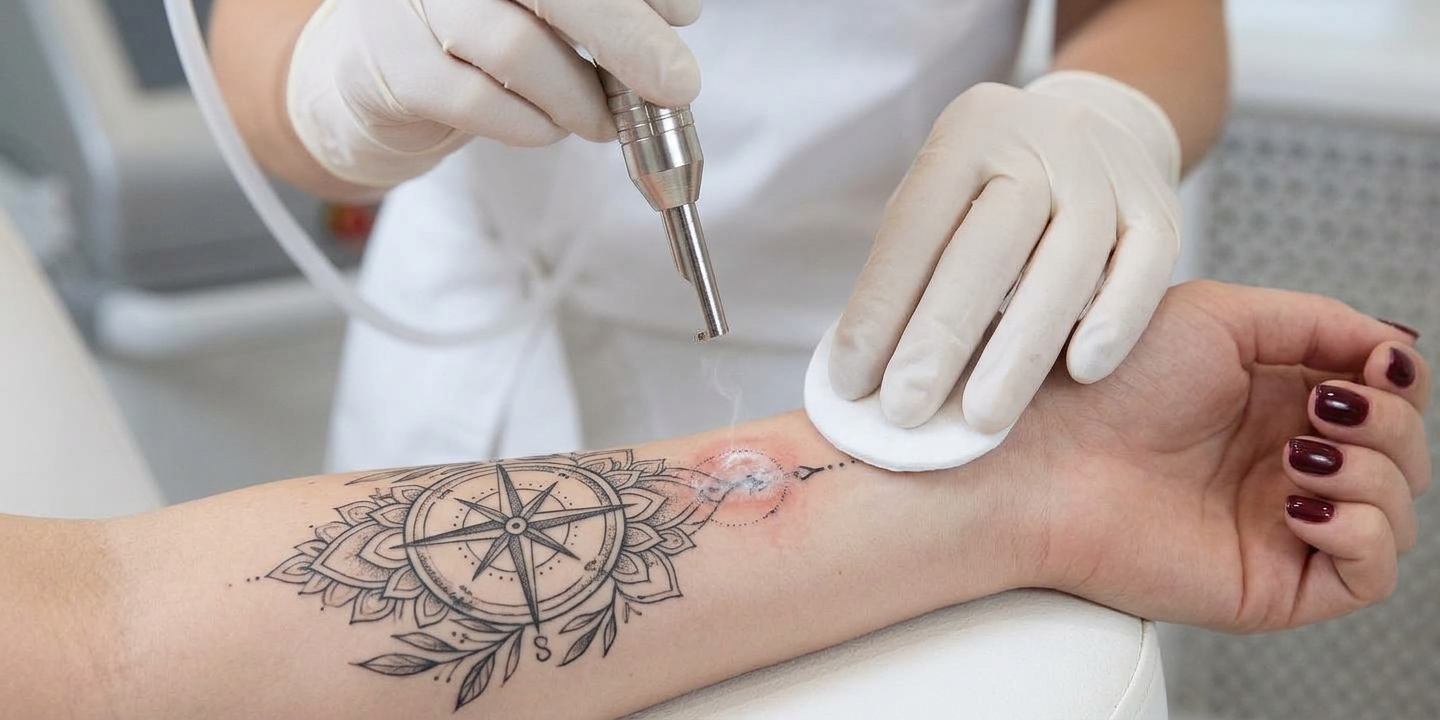
Laser tattoo removal works by firing very short pulses of light that shatter tattoo ink into tiny fragments, which your immune system then clears away over the following weeks. Because the body sets the pace, most tattoos need several sessions spaced weeks apart, and the ink fades gradually rather than in a single visit. Ink colour, density, body location and skin type all affect how many sessions you need. Rushed sessions, overly aggressive settings or non-laser methods can cause blistering, scarring or pigment changes. A doctor’s assessment gives you a realistic timeline before you start.
Key Takeaways
- Fading is gradual because your immune system, not the laser, clears the broken-down ink.
- Expect several sessions, usually four to eight weeks apart, as booking them closer rarely speeds things up.
- Black ink on well-circulated areas tends to clear faster than dense, coloured or layered ink on the hands and feet.
- Choose doctor-led laser treatment over creams, IPL or abrasion, which risk burns and scarring.
- Delay treatment if you are pregnant, freshly tanned or have broken or infected skin over the tattoo.
How Does Laser Tattoo Removal Work?
Why Your Body Does the Real Work
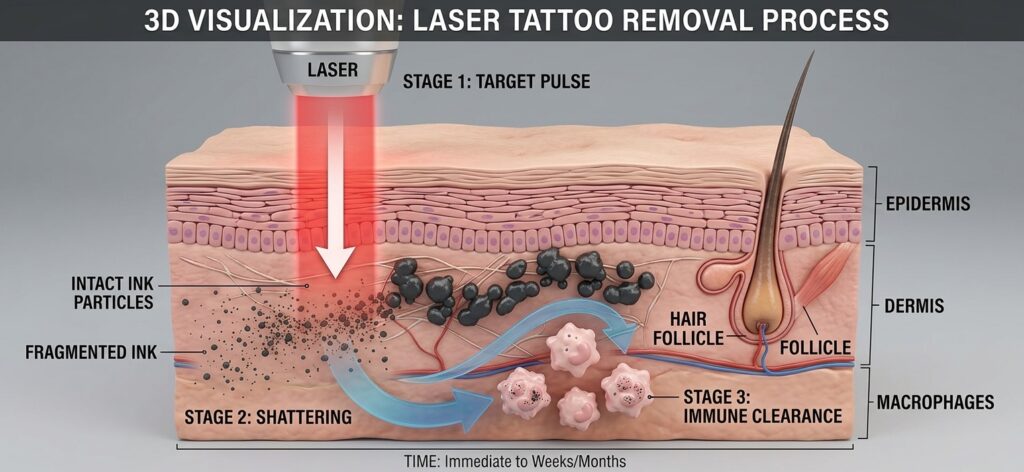
Ink sits in the dermis as particles too large for the immune system to clear, which is why tattoos last. Once the laser breaks them down, white blood cells called macrophages carry the fragments away through the lymphatic system over the following weeks.
Picosecond and Nanosecond Lasers
Nanosecond lasers fire pulses lasting billionths of a second and have been used for decades. Picosecond lasers fire pulses roughly a thousand times shorter, creating more of a mechanical shattering effect with less heat.
A systematic review in Lasers in Medical Science found picosecond lasers cleared mainly black and blue ink with largely minor side effects, though direct comparisons between the two laser types remain limited. Our picosecond laser combines picosecond-structured pulses with nanosecond energy, so settings can be matched to each tattoo.
What Happens During a Session?
- Assessment. During a skin assessment at our Singapore clinic, the doctor checks the tattoo’s colours, density and location, your skin type and any scarring. Cosmetic tattoos such as brow embroidery may need a test patch first.
- Comfort and protection. Numbing cream may be applied, and protective eyewear is worn throughout.
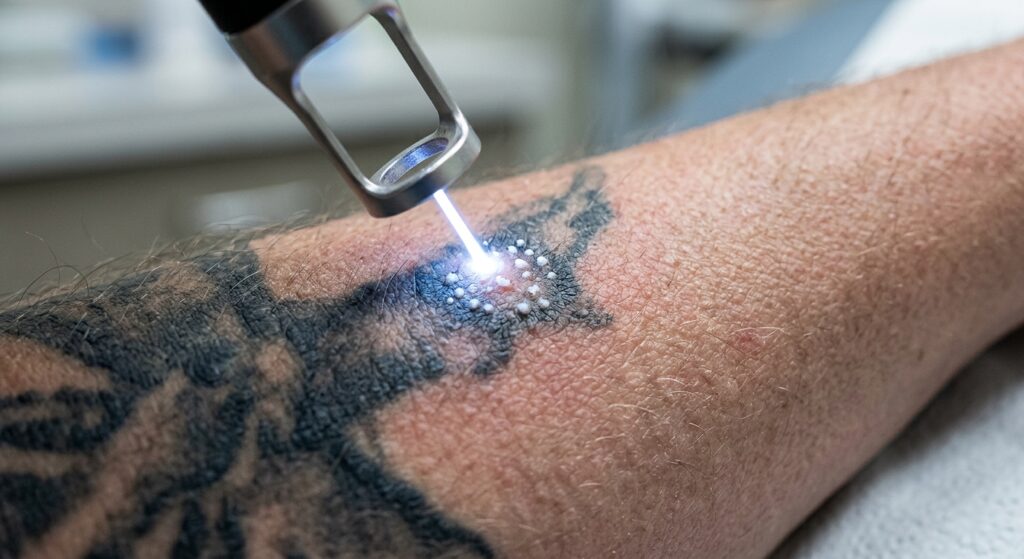
- Treatment. The skin often turns white briefly, known as frosting, as gas escapes from the breaking ink.
- Aftercare. The area is cooled and dressed before you head home.
For denser tattoos, FracTat uses a fractional laser to make tiny micro-channels in the skin first. These let the gas escape, so deeper ink can be treated with more than one pass in a sitting, as explained on our tattoo removal treatment page.
Does Laser Tattoo Removal Hurt?
Most people describe a sharp snapping feeling, like a rubber band flicked against the skin. Numbing cream and cooling help, and later sessions often feel easier as less ink remains.What Recovery Looks Like
Redness, swelling and tenderness are normal for a few days, sometimes with pinpoint bleeding, small blisters or light scabbing.
- Do not pick blisters or scabs, as this raises the risk of scarring and infection.
- Skip pools, saunas and hot baths until the skin settles.
- Keep the area covered from Singapore’s strong sun, and use broad-spectrum sunscreen once healed to lower the risk of darkening.
Who Should Wait Before Treatment?
Laser treatment is usually postponed if you:
- Are pregnant or breastfeeding.
- Have a fresh tan, broken skin or an infection over the tattoo.
- Have a history of keloid scarring.
- Recently took isotretinoin, or use medication that increases sun sensitivity.
How Many Sessions Does Tattoo Removal Take?
Most tattoos need several sessions, often four to eight and sometimes more for dense or coloured ink, spaced around four to eight weeks apart. Returning sooner adds irritation without faster fading, and only an in-person assessment can estimate the exact number.
Factors That Shape Your Timeline
Clinicians often use the Kirby-Desai scale, a scoring tool for estimating how many treatments a tattoo may need. It weighs:
- Skin type. Deeper skin tones, including many Asian skin types, are treated with gentler settings and longer gaps to protect against pigment changes.
- Location. Areas with good circulation, such as the upper body, tend to clear faster than hands, ankles or feet.
- Ink colour. Black responds most readily, while yellow, light green and white are usually more stubborn.
- Amount of ink. Dense professional work generally takes longer than lighter amateur tattoos.
- Scarring and layering. Old scarring and cover-up tattoos both add complexity.
Why Some Tattoo Removal Attempts Fall Short
Disappointing results usually come down to method, settings and timing, which choosing on price per session alone can overlook.
- Unsuitable technology. Intense pulsed light (IPL) and similar non-laser devices are generally not recommended for tattoo ink.
- Aggressive settings. Pushing energy too high to cut sessions can cause blistering, scarring, or patches that turn lighter or darker than the surrounding skin.
- Creams and abrasion. Ink sits deep in the dermis, so surface methods risk burns and scars without reaching it.
- No medical oversight. Some cosmetic inks containing iron oxide or titanium dioxide can darken under a laser, and allergic reactions or infection need prompt medical care.
Can a Tattoo Be Completely Removed?
Many tattoos can be faded until they are barely noticeable, but complete removal cannot be promised for every tattoo. Very dense ink, stubborn colours or skin scarred during tattooing may leave a faint shadow, sometimes called ghosting.
Darker marks after treatment often settle with time and sun protection, and our guide to pigmentation treatment covers the options. For raised scarring, see hypertrophic scars and keloids.

Why Choose Dr Shane for Treatment in Singapore?
Removing a tattoo safely takes more than a powerful laser. It starts with understanding your ink, your skin and how your body clears pigment. If you are ready to move past the uncertainty of retail wellness trends and explore evidence-based clinical treatments tailored to your face, we welcome you to contact our team.
At Dr Shane’s clinic, we believe remarkable results begin with three fundamentals: medical precision, honest advice, and customised care.
While many clinics focus on selling treatments, we prioritise:
- In-depth 1-1 skin health consultations (at least 30 mins)
- HSA/FDA-compliant protocols using approved devices with documented safety profiles
- Personalised energy settings adjusted for your unique skin thickness and concerns
What makes our approach different?
✔ Doctor-Led Consultations
Every treatment plan begins with a medical evaluation of your skin’s needs – not a sales conversation.
✔ Safety-First Philosophy
We use only HSA-approved devices and disclose all potential risks transparently.
✔ No Pressure, Just Professional Advice
You’ll leave your consultation either:
- Confident this treatment is right for you, or
- Aware of better alternatives for your goals
✔ Natural-Looking Results
Our treatment plans prioritise gradual, authentic improvement over dramatic but short-lived changes.
✔ Continued Aftercare
Post-treatment guidance to help maintain and optimise your results
The First Step is Always a Conversation
Many patients discover during consultation that their skin concerns actually require:
→ A different treatment approach
→ Combination therapies
→ Or simply more time before considering procedures
Book a skin health assessment to get professional insights before deciding on any treatment.
Let us help you find what’s right for your skin—not just what’s trending.