
Published on: 25 November 2026
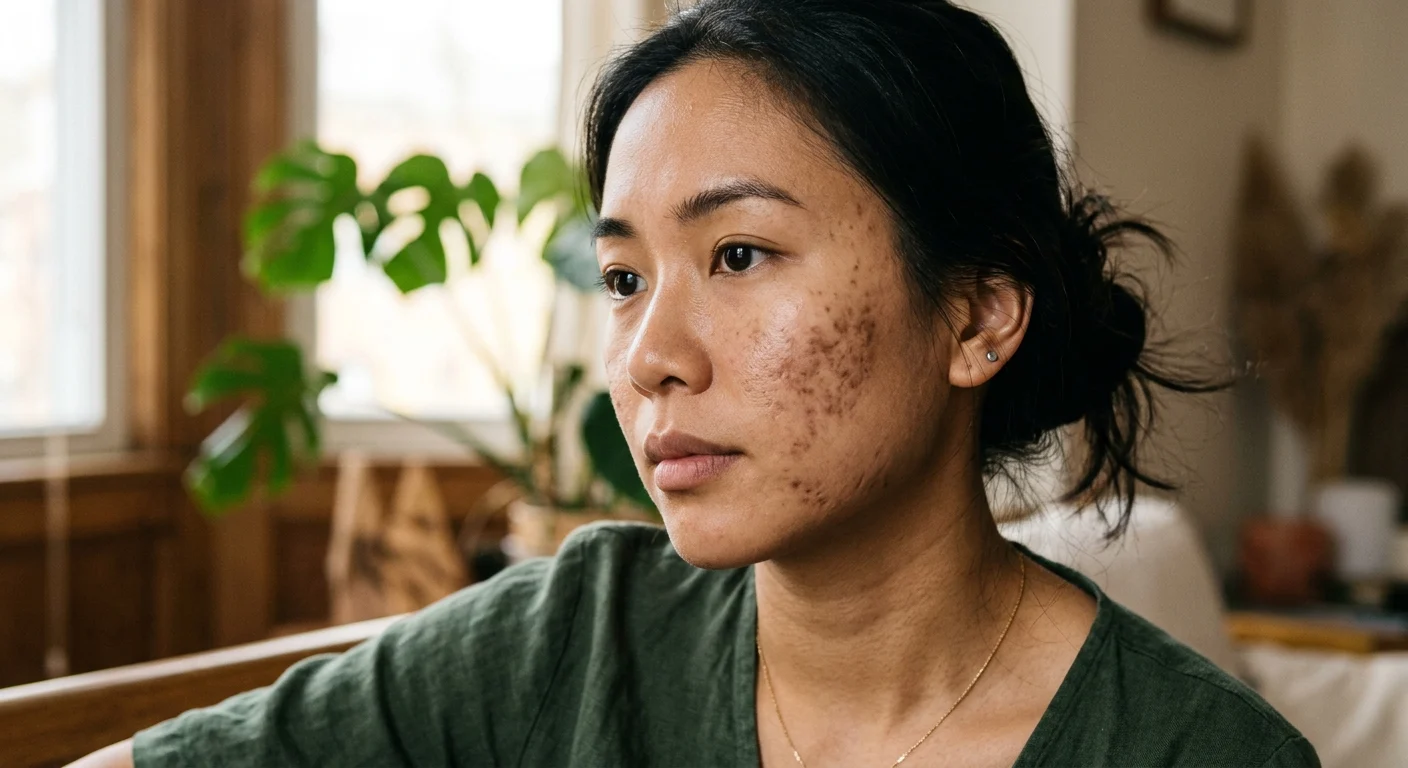
Post-inflammatory hyperpigmentation (PIH) is a flat brown or grey mark left behind after the skin has been inflamed or injured, most often by acne. Inflammation prompts pigment cells to release extra melanin, which is why a dark spot can stay long after the pimple has cleared. PIH is especially common in Asian and darker skin types, and it changes colour rather than texture, so it is not a scar. Many marks fade over several months to a year with sun protection and gentle care, while deeper pigment can last longer. A doctor can confirm the type of mark and suggest suitable treatment.
Key Takeaways
- Check the texture first: Post-inflammatory hyperpigmentation (PIH) is flat, while a raised or dented mark is more likely a scar.
- It is especially common in Asian and darker skin types, and often follows acne, eczema, insect bites or aggressive skin treatments.
- PIH is not a scar. It changes colour, not texture, and many marks fade over months.
- Marks in the upper skin layer usually fade faster than deeper, grey-blue pigment, which can last much longer.
- Calming the inflammation, avoiding picking and protecting the skin from the sun are the foundations of both prevention and treatment.
What Is Post-Inflammatory Hyperpigmentation?
PIH is darkening of the skin that develops after inflammation or injury. When the skin is inflamed, chemical signals stimulate melanocytes, the pigment-producing cells, to release more melanin into the surrounding area.
According to a clinical review of PIH in skin of color, individuals with darker skin phototypes, including Asian skin types, exhibit a higher susceptibility to developing PIH. This population often experiences hyperpigmentation with greater frequency and intensity due to heightened melanocyte reactivity.
Epidermal and Dermal PIH
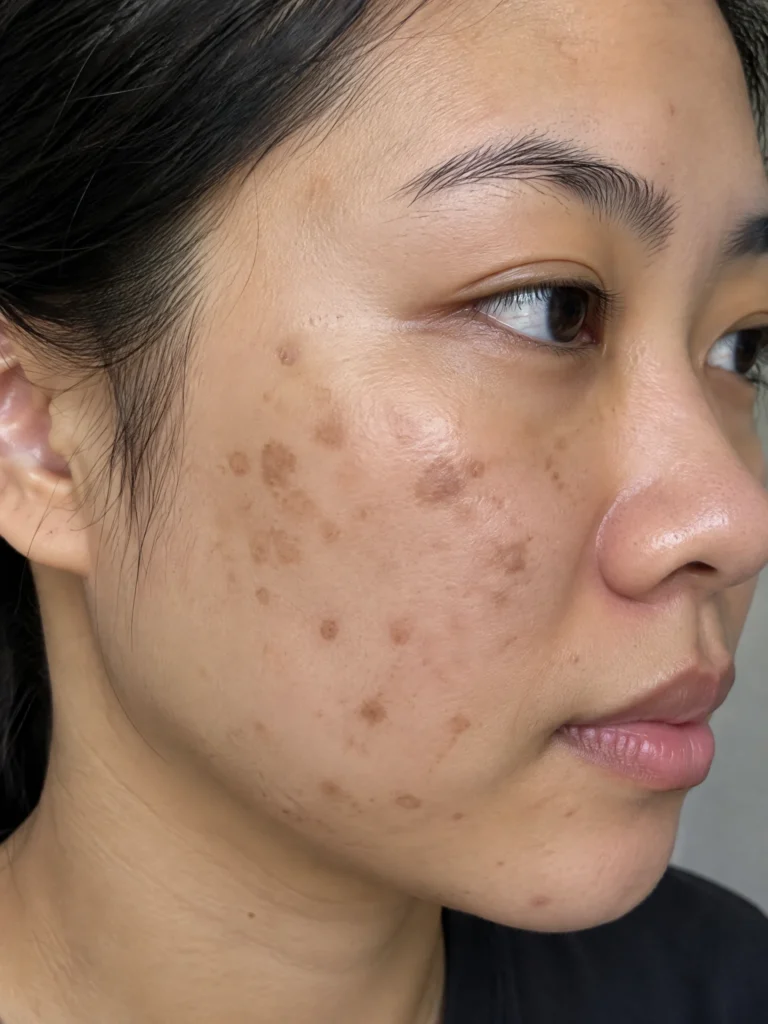
PIH is grouped by how deep the extra pigment sits in the skin, which shapes its colour and how quickly it fades.
- Epidermal PIH sits in the upper layer of skin and looks light to dark brown. It tends to fade more readily.
- Dermal PIH occurs when pigment drops into the deeper layer. It looks grey or blue-grey and can persist for much longer.
What Causes PIH?
Anything that inflames or injures the skin can trigger it. Common causes include:
- Acne, the most frequent trigger, particularly inflamed or cystic spots.
- Picking or squeezing, which deepens inflammation and the resulting mark.
- Eczema, rashes and insect bites, especially when scratched.
- Burns, cuts and friction from shaving or tight clothing.
- Cosmetic treatments such as lasers, peels or waxing when settings or aftercare are not suited to the skin type.
Sun exposure does not cause PIH directly, but UV and visible light darken existing marks and slow their fading. In Singapore’s climate, this is often why marks seem to stick around.
How Is PIH Different From Other Marks?
| Mark | Appearance | What it is |
|---|---|---|
|
PIH |
Flat, brown to grey |
Extra pigment |
|
Post-inflammatory erythema (PIE) |
Flat, pink to red or purple |
Dilated small blood vessels |
|
Acne scar |
Indented or raised |
Changed skin texture |
|
Melasma |
Symmetrical patches, often on cheeks |
Hormone and light-driven pigmentation |
A simple clue is texture. PIH sits flat with the surrounding skin, whereas acne scars change the surface. Melasma has different triggers and needs a different plan, covered in our melasma guide.
Does Post-Inflammatory Hyperpigmentation Go Away on Its Own?
Many PIH marks fade gradually without treatment, provided the original inflammation has settled and the skin is protected from the sun. Epidermal PIH often lightens over several months to a year, while deeper dermal PIH can take considerably longer.
Fresh breakouts keep adding new marks, so the most important step is controlling the cause. Treating active acne early limits how much new pigment forms.
Can PIH Come Back After It Fades?
A faded mark does not usually return on its own, but the same area can darken again if it becomes inflamed or is exposed to strong sun without protection. People prone to PIH tend to develop it with each new trigger, so ongoing sun protection and early treatment of breakouts help keep skin clear.
PIH After Laser or Peel Treatments
Aesthetic procedures can also cause PIH if the energy, peel strength or aftercare does not suit the skin. This is why treatment intensity is usually lower and sessions are spaced further apart for skin types that pigment easily. A test patch may be suggested before a new treatment.
How to Help PIH Fade at Home
- Use sunscreen every day. A broad-spectrum sunscreen, ideally tinted with iron oxides to block visible light, protects against further darkening.
- Leave spots alone. Picking pushes inflammation deeper and prolongs the mark.
- Choose gentle products. Harsh scrubs and frequent peeling can inflame the skin and trigger new PIH.
- Consider evidence-based ingredients. Azelaic acid, niacinamide, retinoids and vitamin C can support fading. Stronger agents such as hydroquinone should be used under medical guidance.
In-Clinic Treatments for PIH
When marks are persistent, a doctor can tailor treatment to the depth of pigment and your skin type. A systematic review of PIH treatment in skin of colour highlights that gentle, carefully dosed approaches matter, since aggressive treatment can itself trigger new PIH.
- Prescription topicals form the base of most plans and are adjusted over time.
- Superficial chemical peels can speed up skin turnover. Peel strength is chosen carefully for skin that pigments easily.
- Low-energy laser treatment such as picosecond laser can help break up stubborn pigment when settings are suited to Asian skin.
During a skin assessment at our Singapore clinic, the doctor first confirms whether the marks are PIH, post-inflammatory erythema (PIE), melasma or scarring, since each responds differently.

Why Choose Dr Shane for Treatment in Singapore?
If you are ready to move past the uncertainty of retail wellness trends and explore evidence-based clinical treatments tailored to your face, we welcome you to contact our team.
At Dr Shane’s clinic, we believe remarkable results begin with three fundamentals: medical precision, honest advice, and customised care.
While many clinics focus on selling treatments, we prioritise:
- In-depth 1-1 skin health consultations (at least 30 mins)
- HSA/FDA-compliant protocols using approved devices with documented safety profiles
- Personalised energy settings adjusted for your unique skin thickness and concerns
What makes our approach different?
✔ Doctor-Led Consultations
Every treatment plan begins with a medical evaluation of your skin’s needs – not a sales conversation.
✔ Safety-First Philosophy
We use only HSA-approved devices and disclose all potential risks transparently.
✔ No Pressure, Just Professional Advice
You’ll leave your consultation either:
- Confident this treatment is right for you, or
- Aware of better alternatives for your goals
✔ Natural-Looking Results
Our treatment plans prioritise gradual, authentic improvement over dramatic but short-lived changes.
✔ Continued Aftercare
Post-treatment guidance to help maintain and optimise your results
The First Step is Always a Conversation
Many patients discover during consultation that their skin concerns actually require:
→ A different treatment approach
→ Combination therapies
→ Or simply more time before considering procedures
Book a skin health assessment to get professional insights before deciding on any treatment.
Let us help you find what’s right for your skin—not just what’s trending.